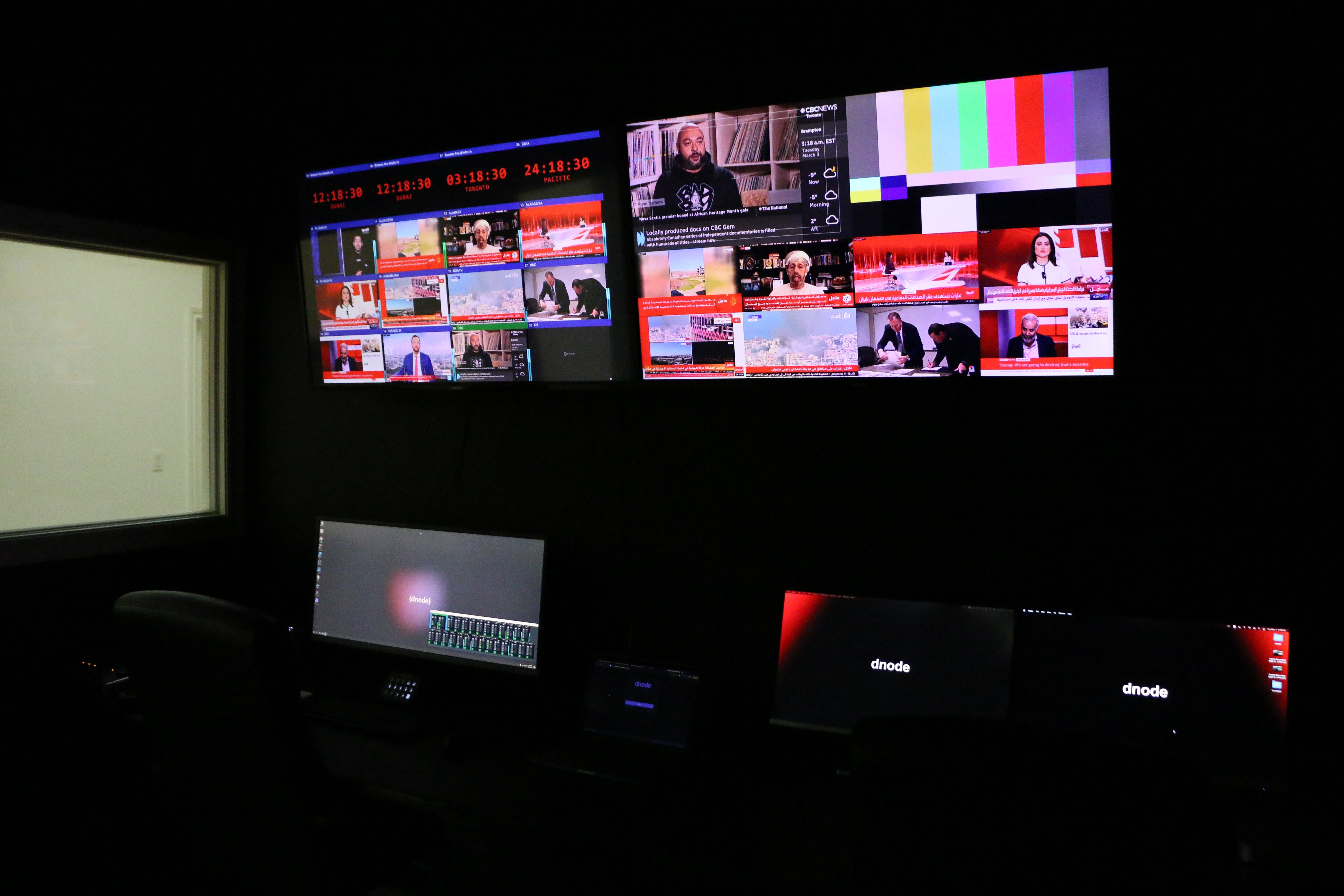
One camera is a record. Multicam is a broadcast.
Multicam is usually the first thing removed from a production budget, and the reasoning is sound on its face. The match is on screen. The score is on screen. It works.
And it does, in the narrow sense. A single camera records a match. Multicam produces one. Those are two different products, and only one of them builds an audience.

What a low bid leaves in your hands
Put two production quotes side by side and the line items will mostly match. Cameras, crew, encoder, stream, a scorebug. One is half the price. Nothing in either document explains the difference, because the difference is not in what is delivered. It is in what happens when something goes wrong.
Rights and clearance. Music beds, walk-out tracks, the arena PA, a sponsor sting, a highlight cut to a track someone liked. Every one of those is a licensing decision, and on most platforms an automated one. The cheaper crew is not deliberately careless. They simply were not hired to think about it, and nobody asked them to.
The crew’s judgement. An experienced operator knows not to let the venue’s playlist run under the pre-game show. That is not craft, it is risk control, and it is invisible in a quote. You cannot tell a cheap crew from a careful one by reading the proposal. You find out afterwards, once.
Who carries it. This is the actual difference between the two numbers. The lower bid has not removed the risk from your event. It has moved it to you. You are now the party who deals with a claim, a takedown or a suspended account, and you will deal with it during a season, not during a procurement cycle.
Your archive is the asset
Federations tend to think they are buying a stream. They are buying an archive.
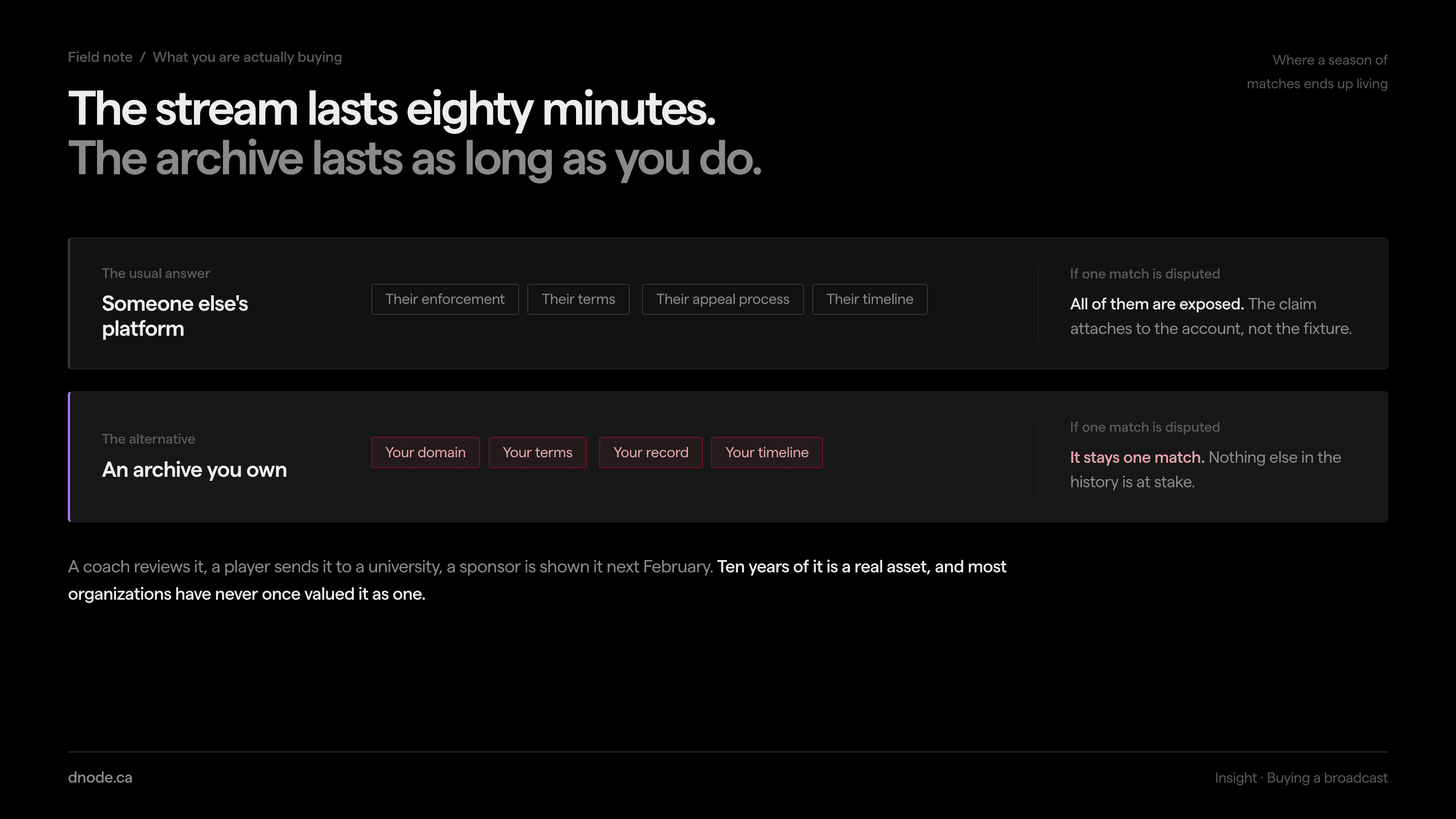
The stream lasts eighty minutes. The recording lasts as long as the organization does. It is what a coach reviews, what a player sends to a university, what a sponsor is shown next February, and what the league’s own history is made of. Ten years of it is a genuine asset, and most organizations have never once valued it as one.
Which makes the next question uncomfortable. Where does it live, and who can remove it?
If the answer is a free third-party platform, then the archive exists at that platform’s discretion. Its enforcement, its terms, its appeal process, on its timeline rather than yours. A dispute over a few minutes of music in one match is not contained to that match. It attaches to the account holding all of them.
That is the risk almost nobody prices, because it does not feel like a production decision. It feels like a hosting decision, made once, years ago, by somebody who has since left.

What to check before you sign
None of this is an argument for spending more. It is an argument for comparing the same thing.
Ask who is responsible for clearance. Not whether they are careful. Who is named, in writing, when a claim arrives. If the answer is nobody, it is you.
Ask where the archive lives, and who can take it down. Then ask what happens to every other match if one is disputed. Most organizations have never asked, and the answer surprises them.
Ask what a viewer is meant to do after the final whistle. If the honest answer is nothing, you have bought a stream, not an audience, and the sponsorship number next year will reflect that.
A cheaper quote is a legitimate choice, and sometimes the right one. But it should be a choice made with the risks visible, not a comparison of two documents that were never describing the same thing.
The organizations that work this out early tend to work it out the same way: they stop buying a broadcast per event, and start building something they own.
View more.